Showing posts with label Barack Obama. Show all posts
Showing posts with label Barack Obama. Show all posts
Wednesday, August 06, 2008
The Faith of Barack Obama
Yes, Barack Obama is no longer a member of the United Church of Christ.
But, his faith was born and molded in the UCC.
For this reason, The Faith of Barack Obama will be of interest to those of us within the denomination.
The book is written by Stephen Mansfield, who also wrote The Faith of George W. Bush.
Mansfield probably didn't get much criticism in the evangelical community for writing about Bush, but he certainly is for writing about Obama. And while Mansfield is upfront that he doesn't agree with Obama politically, he argues that the conservative church community has no right to hate Obama simply for his politics.
I'll provide a full review of Mansfield's book.
That is, if the publisher comes through with their promise of a free copy.


Thursday, June 26, 2008
Dobson Tees Off on Obama
 The Christian blogosphere is criticizing Focus on the Family's Dr. James Dobson after harsh words he made against Barack Obama on a Tuesday radio broadcast.
Reacting to a speech Obama gave two years ago at a Sojourners' convention, Dobson accused Obama of "deliberately distorting the traditional understanding of the Bible to fit his own worldview," and called Obama's suggestion for how religious people should engage in politics, the "lowest common denominator of morality," labeling it "a fruitcake interpretation of the Constitution."
Scot McKnight of Jesus Creed said, "Dobson and his companion commentator routinely distorted what Obama was saying by rephrasing and capturing what he said in their own context and for their own agendas." Jim Wallis, founder of Sojourners, responded saying "Dobson either didn't understand it or is deliberately distorting it." Rev. Kirbyjon Caldwell, leader of the largest Methodist congregation in the country, went so far as to establish a website called "James Dobson Doesn't Speak for Me."
My reaction to Dobson? His method of criticizing Obama was a waste of precious broadcast time. He was too emotional, too concerned about Obama's reference to himself, and failed to substantially engage Obama's argument on how religious people should conduct themselves in politics.
What sparked Dobson's "fruitcake interpretation of the Constitution" was this remark by Obama:
"Democracy demands that the religiously motivated translate their concerns into universal, rather than religion-specific, values. It requires that their proposals be subject to argument, and amenable to reason. I may be opposed to abortion for religious reasons, but if I seek to pass a law banning the practice, I cannot simply point to the teachings of my church or evoke God's will. I have to explain why abortion violates some principle that is accessible to people of all faiths, including those with no faith at all. Now this is going to be difficult for some who believe in the inerrancy of the Bible, as many evangelicals do. But in a pluralistic democracy, we have no choice. Politics depends on our ability to persuade each other of common aims based on a common reality."Obama's point is well taken in this sense: If religiously motivated people want to succeed in a democracy, argue your case based on reason and "universal" values. That's good strategy. And actually, Christians do that already. My only reaction is that democracy doesn't demand this. In the public square, people can argue their case any way they want. So if they want to cite Scripture or make religion specific arguments, let them do so.
When it comes to Obama's use of Scripture, Dobson said, "I think he's deliberately distorting the traditional understanding of the Bible to fit his own worldview, his own confused theology." In tit for tat fashion, Obama responded the following day that Dobson was, "making stuff up." Dobson's anger arose from this Obama quote from that speech two years ago:
"And even if we did have only Christians in our midst, if we expelled every non-Christian from the United States of America, whose Christianity would we teach in the schools? Would we go with James Dobson's, or Al Sharpton's? Which passages of Scripture should guide our public policy? Should we go with Leviticus, which suggests slavery is ok and that eating shellfish is abomination? How about Deuteronomy, which suggests stoning your child if he strays from the faith? Or should we just stick to the Sermon on the Mount - a passage that is so radical that it's doubtful that our own Defense Department would survive its application? So before we get carried away, let's read our bibles. Folks haven't been reading their bibles."Obama poses a hypothetical question: that if we were strictly a nation of only Christians, what method of interpretation (or hermeneutic) would be used to understand the Bible's message and in turn govern ourselves? Dobson misses the question entirely.
Rhetorically though, Obama's question is an obvious jab at "literalists" or conservative Christians-- evidenced by the remark, "Folks haven't been reading their bibles (sic)." No, reading the Bible isn't the problem as much as it is interpreting the Bible and by extension interpreting how faith should translate into political action. Dobson's arrows of criticism would be far more effective if he went in that direction. Like this:
So how does Obama read his Bible? He thinks the Sermon on the Mount puts demands on government to dismantle its military! Imagine that in the day we live in!
How does Obama put faith into political action? Listen to this:
And by the way, we need Christians on Capitol Hill, Jews on Capitol Hill and Muslims on Capitol Hill talking about the estate tax. When you've got an estate tax debate that proposes a trillion dollars being taken out of social programs to go to a handful of folks who don't need and weren't even asking for it, you know that we need an injection of morality in our political debate.You work hard all your life and at your death, Obama believes government should take away and deny your loved ones your hard earned money because you obviously "don't need it" nor were you "asking for it." Elect Obama and elect a President who truly believes he's entitled to take away your money.
Here's the bottom line: Dobson is a radical conservative, pro-life, and pro-traditional marriage. Obama is a radical liberal, pro-abortion, and pro-same-sex civil unions. While I share Obama's faith, in no way do I share his politics.
May we who are Christians decide with an informed and prayerful faith.
And let democracy decide.
Wednesday, April 30, 2008
Report: Wright Feels Betrayed
 After the controversial remarks made by Rev. Jeremiah Wright, Jr. during the Q & A at Monday's National Press Club meeting, many pundits think Wright is intentionally seeking to bring down Barack Obama's presidential hopes.
Why?
An unnamed source tells the New York Post:
"After 20 years of loving Barack like he was a member of his own family, for Jeremiah to see Barack saying over and over that he didn't know about Jeremiah's views during those years, that he wasn't familiar with what Jeremiah had said, that he may have missed church on this day or that and didn't hear what Jeremiah said, this is seen by Jeremiah as nonsense and betrayal," said the source, who has deep roots in Wright's Chicago community and is familiar with his thinking on the matter. "Jeremiah is trying to defend his congregation and the work of his ministry by saying what he is saying now," the source added. "Jeremiah doesn't care if he derails Obama's candidacy or not... He knows what he's doing. Obviously, he's not a dumb man. He knows he's not helping."Ironically, in Wright's address before the National Press Club-- that is, his speech before the Q & A time, remarks that didn't make the sound clip bites-- Wright spoke eloquently about race and black church history, suggesting:
Maybe this dialogue on race, an honest dialogue that does not engage in denial or superficial platitudes, maybe this dialogue on race can move the people of faith in this country from various stages of alienation and marginalization to the exciting possibility of reconciliation.I know a good place to start.
Tuesday, April 29, 2008
Obama Finally Condemns Rev. Wright
 Injuring. Sad. Angry. Disrespect. Shocked. Not grounded in truth. Insult. Contradiction. Objectionable. Inexcusable. Betrayed. He didn't show much concern for me. Offensive. That's enough. Great damage. Won't be the same anymore.
At a press conference this afternoon (transcript here), Presidential democratic candidate Barack Obama used all the above words to condemn and disassociate himself from his former pastor, Rev. Jeremiah Wright, Jr.
"He made a caricature out of himself," Obama said to summarize Rev. Wright's "performance" over the weekend and on Monday at the National Press Club (transcript here).
Obama was somber throughout and was clearly heart broken about his 20 year relationship with Wright publicly going up in flames, and maybe his campaign too.
"It's a fiasco," said Michael A. Genovese, chairman of the Institute for Leadership Studies at Loyola Marymount University in Los Angeles. "With friends like these, who needs enemies?"In parting ways with Wright, Obama's relationship to Chicago Trinity UCC is now strained and his rapport with the United Church of Christ suffers a severe blow, especially since the national office has nary said one critical word of Wright.
What's especially ridiculous about this whole controversy-- as it relates to the United Church of Christ-- is this has little to do with theology and everything to do with left-wing kook politics.
As pundits ask whether Wright deliberately sabotaged Obama's campaign, what will the national office say now? That'll be an interesting press release. "All this underscores the need for a sacred conversation?" "Sometimes we disagree among ourselves in the UCC?"
Wright isn't someone to disagree over. His arrogance and politics need to be firmly rebuked.
Obama finally gets it. Will Cleveland?
Monday, April 21, 2008
Obama Worships at UCC Church
 Democratic presidential candidate Barack Obama on Sunday worshiped at a church that's part of his denomination, St. Mark's UCC in Lebanon, Pennsylvania:
Illinois Sen. Barack Obama paid a surprise visit to Lebanon County when he attended Sunday morning's worship service at St. Mark's United Church of Christ.Since everything a politician does is carefully scripted, we'll do our part here as media hacks to over analyze Obama's steps.
About 200 people gathered in the 426 N. Eighth St. church's sanctuary afterward to catch a glimpse of the Democratic presidential hopeful... For almost an hour, Obama shook hands, posed for pictures and signed autographs at the front of the sanctuary for everyone who patiently waited to greet him.
A member of the Penn Central conference, St. Mark's is one of six UCC churches in Lebanon. Two UCC churches in Lebanon were "Five for Five" churches in 2006, but St. Mark's wasn't one of them. "Five for Five" churches are those who give to all of the UCC's one time yearly offerings. While the UCC Coalition doesn't list them, UCC.org's "Find a Church" reports that St. Mark's is an ONA church, or open and affirming, meaning that the church welcomes into their full life and ministry persons of all sexual orientations and gender identities. As we reported earlier, Pennsylvania is thick with UCC churches, so Obama inevitably had to pass over several possibilities. St. Mark's doesn't have a website, so here's guessing that Obama's campaign sought the advice of Penn Central Conference Minister, Rev. Dr. Marja Coons-Torn.
In all likelihood, Obama's appearance was designed to garner some "Obama At Church" photos and headlines to hopefully take the sting out of his "bitter" comment, when he privately told a San Francisco fund raiser audience that rural people cling to guns and religion. Lebanon County has one third class city and is 54% farm land, so Obama decided to go into the bitter heartland.
Pennsylvania's primary vote is Tuesday. Obama and Hillary Clinton are neck and neck in the polls.
Was this the first time that Obama stepped foot inside any church or a UCC church since the Jeremiah Wright controversy broke out?
Thursday, April 17, 2008
Obama Keeps Backing Away from Wright
 Speaking to Jewish community leaders yesterday at Congregation Rodeph Shalom in Philadelphia, Democratic presidential hopeful Barack Obama continues to back away from the rhetoric of his pastor Rev. Jeremiah Wright, Jr.:
The Illinois senator has been working to reassure Jewish voters nervous about his candidacy after publicity about anti-Israel sentiments expressed by his former pastor, the Rev. Jeremiah Wright, and criticism from Hillary Rodham Clinton during a February debate that he hadn't immediately rejected an endorsement from black Muslim leader Louis Farrakhan. Obama responded that he already denounced Farrakhan, but would reject his support as well.But do Obama's remarks contradict what he said earlier in his well-known race speech on March 18?
Obama told the group he had not been aware of Wright's more incendiary speeches before launching his presidential campaign last year, even though he had been a member of Wright's congregation for nearly 20 years. Obama said he had spoken to Wright and privately conveyed his concerns about some of the sermons once he learned of their content. But he acknowledged that he had declined to be more public in his criticism until recently, since Wright was preparing to retire from ministry at Chicago's Trinity United Church of Christ.
"You make a decision about how are you going to handle it," Obama said. "Do you publicly denounce his comments? Do you privately express concern but recognize you are still part of a broader church community that is going to be transitioning? I chose the latter."
I have already condemned, in unequivocal terms, the statements of Reverend Wright that have caused such controversy and in some cases pain For some, nagging questions remain. Did I know him to be an occasionally fierce critic of American domestic and foreign policy? Of course. Did I ever hear him make remarks that could be considered controversial while I sat in the church? Yes. Did I strongly disagree with many of his political views? Absolutely – just as I’m sure many of you have heard remarks from your pastors, priests, or rabbis with which you strongly disagreed.You decide.
Tuesday, April 15, 2008
Obama Insults His Own
 You know that Presidential candidate Barack Obama is under heavy criticism after uttering the following put down about rural Pennsylvanians:
"You go into some of these small towns in Pennsylvania, and like a lot of small towns in the Midwest, the jobs have been gone now for 25 years and nothing's replaced them... And they fell through the Clinton Administration, and the Bush Administration, and each successive administration has said that somehow these communities are gonna regenerate and they have not. And it's not surprising then they get bitter, they cling to guns or religion or antipathy to people who aren't like them or anti-immigrant sentiment or anti-trade sentiment as a way to explain their frustrations."You know too that Obama is a member of the United Church of Christ. But do you know, and ironically, does Obama realize how many of these rural and religious Pennsylvanians he insulted are members of his own denomination?
According to the Center for Rural Pennsylvania and their report, "Religious Establishments in Rural Pennsylvania":
The religious establishments with the most congregations in Pennsylvania’s rural counties were: the United Methodist Church, the Catholic Church, the Evangelical Lutheran Church in America, the Presbyterian Church, U.S.A., and the United Church of Christ. These same congregations were also the top five congregations in urban counties.Looking at the delegate distribution from the 26th General Synod, nearly 15% of the United Church of Christ's 1.2 million members reside in Pennsylvania. That's 182,779 people. In fact, the UCC is so big in Pennsylvania it has not two, four Conferences in the state-- Penn Central, Pennsylvania Northeast, Pennsylvania Southeast, and Pennsylvania West. With the exception of Penn West, each of these conferences are among the top 10 in delegate ranks at Synod.
Obama's unguarded words, spoken at a closed fund raiser in San Francisco on April 6, likely hit the intended target of dipping into the pockets of some rich elitist Democrats. But the spray of the buckshot has at least one Pennsylvania UCC member fretting.
The UCC Pennsylvanians who are fans of the "God Is Still Speaking" commercials likely won't take offense. They understand Obama is talking about those other churches-- the ones with bouncers and ejector seats. However, it was the UCC that once had on its rolls a historic church in rural Kansas called Beecher Rifle & Bible Church.
Obama knows his words have hurt him politically-- he's still spinning what he meant to say.
He's certainly learned one thing:
The tongue is like a rifle-- you can always reload, but once you pull the trigger, you can never put that shot back into the barrel.
Monday, March 17, 2008
Trinity, Wright, and Context
 Trinity United Church of Christ, the home church of Presidential candidate Barack Obama, vigorously defended itself and its past minister Rev. Dr. Jeremiah Wright, Jr. on Sunday, accusing its critics of character assassination.
According to the Politico, Trinity's new pastor Rev. Otis Moss III:
...delivered a fiery sermon Sunday, defending the African-American church’s right to speak out about social issues. He stressed Trinity's work in its still-impoverished community, mentioning the church's scholarship programs, drug counseling, SAT prep classes, and missions to Africa.The church also issued a statement (scroll to bottom) with the heading, "An Attack on Our Senior Pastor and the History of the African American Church":
"Our very sanity is connected to the church. If it hadn't been for the church we would have lost our minds in the insanity of racism," he said, in a sermon titled, "Why the Black Church Won't Shut Up."
Nearly three weeks before the 40th commemorative anniversary of the murder of the Reverend Dr. Martin Luther King Jr., the Reverend Dr. Jeremiah A. Wright Jr.’s character is being assassinated in the public sphere because he has preached a social gospel on behalf of oppressed women, children and men in America and around the globe.Obviously, Trinity isn't apologizing for anything-- about itself or Rev. Wright's over-the-top pulpit words.
“Dr. Wright has preached 207,792 minutes on Sunday for the past 36 years at Trinity United Church of Christ. This does not include weekday worship services, revivals and preaching engagements across America and around the globe, to ecumenical and interfaith communities. It is an indictment on Dr. Wright’s ministerial legacy to present his global ministry within a 15- or 30-second sound bite,” said the Reverend Otis Moss III, pastor of Trinity United Church of Christ...
...Trinity United Church of Christ’s ministry is inclusive and global. The following ministries have been developed under Dr. Wright’s ministerial tutelage for social justice: assisted living facilities for senior citizens, day care for children, pastoral care and counseling, health care, ministries for persons living with HIV/AIDS, hospice training, prison ministry, scholarships for thousands of students to attend historically black colleges, youth ministries, tutorial and computer programs, a church library, domestic violence programs and scholarships and fellowships for women and men attending seminary...
...Dr. Martin Luther King Jr. preached the Christian tenet, “love thy neighbor as thyself.” Before Dr. King was murdered on April 4, 1968, he preached, “The 11 o’clock hour is the most segregated hour in America.” Forty years later, the African American Church community continues to face bomb threats, death threats, and their ministers’ characters are assassinated because they teach and preach prophetic social concerns for social justice. Sunday is still the most segregated hour in America.
Their response also seeks to explain itself in broader context.
The church-- and our denominational leaders-- put into context Rev. Wright's strengths: 36 years of preaching, a vibrant church, and dozens of social service programs. Yet none of these good works excuse Rev. Wright's now famous remarks. In fact, spotlighting the good works makes one wonder even more why Pastor Wright spoke so inflammatory.
The church is also putting its situation in the broader context of American black history, as seen in the church's press release. 40 years ago, it says, Rev. Dr. Martin Luther King was murdered. Now, they say, Rev. Wright's "character is being assassinated in the public sphere because he has preached a social gospel..."
When you put something into broader context, the goal is to bring something into greater clarity. But when the church press release brings up Dr. King's death and associates that event with Dr. Wright's character assassination by the media, that's not contextual clarity, that's contextual confusion. Dr. Wright isn't suffering because he, like Dr. King preached a social gospel. Dr. Wright is suffering because he's uttered ridiculous remarks.
Context, particularly the failure to put things in proper context, is the reason why Rev. Wright is under so much criticism. For example, his assertion that America got what it deserved on 9/11-- because of what our country did to the Japanese, Palestinians, and black South Africans-- is contextualizing that most people don't buy, and for good reason.
Meanwhile, as the church unapologetically stands behind Rev. Wright, the context that Senator Obama will face is this: He'll remain under pressure to keep emphasizing that he condemns Wright's remarks. And the church's stance may force Obama to distance himself even further from a congregation and minister that he obviously loves.
Friday, October 26, 2007
Obama Facing Concert Critique from Gay Rights Groups
 United Church of Christ member and Presidential candidate Barack Obama is facing criticism from segments of the gay rights community as his South Carolina campaign begins a weekend series of Gospel concerts in order to reach religious voters in the state.
The "EMBRACE THE CHANGE! Gospel Tour" takes place in three cities and features two popular artists who've spoken out against homosexuality-- Mary Mary and Donnie McClurkin-- a former homosexual who now renounces the lifestyle.
Gay rights groups, like Truth Wins Out, are upset the Obama campaign has not removed McClurkin from its list of performers. In response, an openly gay minister was added to the tour to give an invocation. And Obama himself issued the following:
I have clearly stated my belief that gays and lesbians are our brothers and sisters and should be provided the respect, dignity, and rights of all other citizens... I strongly believe that African Americans and the LGBT community must stand together in the fight for equal rights. And so I strongly disagree with Reverend McClurkin's views and will continue to fight for these rights as President of the United States to ensure that America is a country that spreads tolerance instead of division.Still, that statement hasn't completely satisfied Joe Solmonese, President of Human Rights Watch, who made the following statement on Thursday:
I spoke with Sen. Barack Obama today and expressed to him our community’s disappointment for his decision to continue to remain associated with Rev. McClurkin, an anti-gay preacher who states the need to ‘break the curse of homosexuality.’ There is no gospel in Donnie McClurkin’s message for gay, lesbian, bisexual and transgender people and their allies. That’s a message that certainly doesn’t belong on any Presidential candidate’s stage.But as a matter of policy, Obama supports every issue of concern to gay rights groups, short of same-sex marriage-- even while a Winthrop/ETV poll of African Americans in South Carolina shows that 74% view "sex between two adults of the same sex" as "unacceptable," with 62% calling it "strongly unacceptable." Certainly if elected, Obama will be a friend to gay civil rights groups.
So why are these same groups insistent that McClurkin be removed?
If one went so far as to look at this situation through the theological lens of the United Church of Christ, isn't Obama's campaign simply trying to bring people from all sides together, so that "all may be one"?
Donnie McClurkin and Mary Mary are demonstrating "tolerance" by associating their name with a candidate who supports the political agenda of gay rights groups.
The openly gay minister praying the invocation is showing "tolerance" by sharing the same stage with performers who believe homosexuality grieves the heart of God.
Where then is the "tolerance" of groups like Human Rights Watch and Truth Wins Out? If someone personally believes homosexual practices are wrong, yet wants to work with a politician who supports gay rights, why should that person be denied the ability to participate?
It goes to show: Exclusion is not just the exclusive work of political and religious conservatives.
UPDATE: The New York Times reports on McClurkin's concert appearance.
Wednesday, October 10, 2007
A Kingdom Right Here On Earth
 "I want all of you to pray that I can be an instrument of God... We're going to keep on praising together. I am confident that we can create a Kingdom right here on Earth."
Which candidate for President made this statement over the weekend?
Was it former Baptist preacher Mike Huckabee? Nope.
Could it have been the dedicated Mormon and Republican Mitt Romney? No.
How about social conservative and Catholic Sam Brownback? It's not him either.
Or, John McCain, a former Episcopalian and now Baptist? Wrong again.
It was none other than Barack Obama, Democratic hopeful and United Church of Christ (UCC) member.
Obama made the remark during a 15 minute speech at Pentecostal megachurch Redemption World Outreach Center, in Greenville, South Carolina, on Sunday, October 7.
Create a Kingdom right here on Earth.
Now if George Bush (or any front running Republican) made this statement, the media pundits would be in a foaming frenzy of outrage and condemnation:
Why, he wants to turn the United States into a theocracy!Instead, the media commentators are giving Obama a pass. Liberal policies will do that.
Still, it's interesting listening to Obama's religious rhetoric on the campaign trail and comparing it to the way faith is typically expressed within his denomination.
For instance, Obama told the multicultural audience at Redemption World Outreach about his work years ago in Chicago as a community organizer of churches:
I thought I was coming to save a ministry but in fact I was being saved, and I accepted Jesus Christ into my life.When do you hear anything like that at United Church of Christ meetings? Talk of redemption and salvation through Jesus? Frankly, it'd do the UCC a lot of good. But that's the language of conservatives and evangelicals, who'd appreciate this saying from Obama-- that is, if he wasn't a liberal:
These days, when people ask me, ‘What role does religion play in your work?’ – You’re running for president of the United States, the leader of the free world. What role does faith play? It plays every role.Every role?
Again, does anyone hear this kind of talk within the UCC? If a Republican said this, how many UCC people would be-- let's put it in political terms-- deeply concerned?
On the other hand, Obama paints a vision of unity where people from all sides join together to solve common problems:
As I travel around the country I feel hopeful and optimistic. There's God's spirit in each and everyone of us that's waiting to be released and to be let out... He wants us to join together and break the partisan divisions.That certainly is UCC language, a hope expressed in the logo, "That They May All Be One" (John 17:21).
With his religious campaign rhetoric, Obama is reestablishing something Democrats have ignored for years-- the relationship between faith and politics. Whether Obama's strategy of reaching a broad spectrum of Christians succeeds or not, op-ed columnist Michael Gerson of the Washington Post has some good advice for any politician who seeks to baptize their agenda in religious rhetoric:
The essential humanism of Christianity requires an active, political concern about human dignity and the rights of the poor and weak. But faith says little about the means to achieve those ideals. The justice of welfare reform or tax cuts or moving toward socialized medicine is measured by the outcome of these changes. And those debates cannot be short-circuited by the claim "Thus sayeth the Lord," spoken by the Christian Coalition or the United Church of Christ.Create a kingdom right here on earth. How?
That is why we have elections.
Friday, June 29, 2007
Analyzing Barack Obama's "Politics of Conscience"
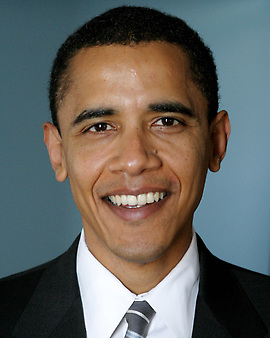 Barack Obama's "A Politics of Conscience,"-- his vision on how faith informs politics, and delivered to his own denomination the United Church of Christ on June 23-- is getting critical notice.
Elizabeth Hamilton, a staff writer at the Hartford Courant who covered the UCC's General Synod, observed that Obama's speech was:
Part political stump speech and part religious rallying cry, the address delivered something Obama has become known for - a liberal message while borrowing from religious conservatives one of their main tools, moral outrage grounded in faith, to make his points about such topics as poverty, immigration, Guantanamo Bay and the Iraq war.But will that strategy appeal to voters?
Michael Gerson writes in the Washington Post that while, "The Gospel of Obama" credits the work of evangelicals, it fails to account for changing trends among these Christians. Gerson gives Democrats three difficult suggestions to better reach them.
Whether Obama's strategy of reaching a broad spectrum of Christians succeeds or not, Gerson believes that any politician who seeks to baptize their agenda should beware:
The essential humanism of Christianity requires an active, political concern about human dignity and the rights of the poor and weak. But faith says little about the means to achieve those ideals. The justice of welfare reform or tax cuts or moving toward socialized medicine is measured by the outcome of these changes. And those debates cannot be short-circuited by the claim "Thus sayeth the Lord," spoken by the Christian Coalition or the United Church of Christ.
Thursday, June 28, 2007
Barack Obama's Restless Conscience--and Mine
 Barack Obama says his conscience cannot rest.
37 million Americans are poor. 45 million don't have health insurance. Genocide in Darfur continues unabated. Guantanamo Bay remains open. The Iraq war goes on. 12 million undocumented immigrants are in our country.
With these issues, Obama declared his presidential priorities in his speech, "A Politics of Conscience." The address is significant because Obama reestablished what Democrats have ignored for years-- the necessary relationship between faith and politics.
Obama delivered the remarks to his own liberal denomination, the United Church of Christ, at its General Synod in Hartford, Connecticut on June 23.
I think Christian Republicans and Christian Democrats, liberal or conservative, can wholeheartedly agree that the problems Obama cites are not just political issues. Rather, they are political issues with an inherent moral component that demands a response from people of faith.
However, Obama brashly asserts that the recent priorities of Christian people in the public square has been subversively rearranged:
But somehow, somewhere along the way, faith stopped being used to bring us together and started being used to drive us apart. It got hijacked. Part of it's because of the so-called leaders of the Christian Right, who've been all too eager to exploit what divides us. At every opportunity, they've told evangelical Christians that Democrats disrespect their values and dislike their Church, while suggesting to the rest of the country that religious Americans care only about issues like abortion and gay marriage; school prayer and intelligent design. There was even a time when the Christian Coalition determined that its number one legislative priority was tax cuts for the rich. I don't know what Bible they're reading, but it doesn't jibe with my version.It's kind of snide, but I like this question that Tygrrrr Express asks every democratic candidate:
You have all explicitly or implicitly stated that religious Christians have hijacked religion. Is this more or less serious than Islamofacists hijacking airplanes, and why?Obama calls for unity among people of faith, but it won't work until you answer two very important questions: 1) what is the best way to solve these problems; and 2) why are these problems your priorities?
Obama accuses the Christian Right of leading people to believe that the faithful care only about "abortion, gay marriage, school prayer, and intelligent design."
This is clever rhetoric.
You're led to believe that Obama has a circle of "care" far more expansive than those narrow minded, callous Christians on the right. They don't "care" about the poor or universal health coverage. Obama does. And he will do something about it.
Frank Pastore makes a good reply on behalf of conservative believers:
We care a lot about these things, and we prove it through both our taxes and our donations. But, apparently we don’t care enough for the Left or Jim Wallis. We must care “more.”Yes, the faith of Obama also "cares" about abortion and gay marriage. But he certainly doesn't "care" about them in same way that religious conservatives do.
Wallis is fond of saying “budgets are moral documents.” He’s right. A federal budget is a snapshot of the current moral values system of the nation...
So, when he implies “care more,” let’s translate. “We must raise your taxes..."
Raise your hand if paying around 30% is not quite your "fair share."
Obama says his conscience cannot rest. Neither can mine.
My conscience cannot rest until abortion is outlawed and justice is secured on behalf of 40 million babies slaughtered by Roe vs. Wade.Christians need to be involved in politics. And I am glad that Obama is doing his part.
My conscience cannot rest until marriage is defined in our Constitution as the union of one man and one woman.
My conscience cannot rest until we secure our borders and stem the tide of illegal immigration.
My conscience cannot rest if we leave Iraq prematurely and let it become another Cambodia.
My conscience cannot rest until we defeat Islamic terrorists who hate our freedom.
My conscience cannot rest until out-of-control big government-- it's earmark spending and burdensome regulations-- are cut down to size.
But all Christians should proceed carefully.
When Obama's (and my) United Church of Christ continuously take liberal political stances, God's kingdom agenda gets reduced to a political platform. Too bad, because God's agenda is far, far bigger.
On the other hand, we shouldn't think that God's will can not be expressed in a political platform.
Politics is difficult, but necessary work for Christians who are commanded to put their faith into action.
"Would that we did not face such a choice," writes Marvin Olasky. "But we do, and given God’s rule over everything, it is a choice that God has given us. That should give us some hope, and also push us to prayer."
Wednesday, June 27, 2007
Did Faith Get "Hijacked" as Obama Claims?
 Barack Obama claims that Christian faith got "hijacked."
In his speech, "A Politics of Conscience,"-- delivered to his own progressive denomination the United Church of Christ at its General Synod in Hartford, Connecticut on June 23-- Obama holds up a vision of liberal and conservative Christians working together for political ends, but he glosses over differences that ultimately divide the two camps.
Obama made several statements that conservatives and liberals can both affirm:
The lie ... that the separation of church and state in America means faith should have no role in public life...Some secular progressives contend that all religious morality should be kept out of politics. But let's be honest: everyone dips their bucket into a moral well. For some, that well is religion. For others, it's the "collective wisdom of humankind." No one should be kept out of the public square because of the source of their morality.
People are coming together around a simple truth – that we are all connected, that I am my brother's keeper; I am my sister's keeper. And that it's not enough to just believe this – we have to do our part to make it a reality.
...Our values should express themselves not just through our churches or synagogues, temples or mosques; they should express themselves through our government...
My faith teaches me that I can sit in church and pray all I want, but I won't be fulfilling God's will unless I go out and do the Lord's work.
Obama supports his belief that faith belongs in politics with an illustration that surprisingly mirrors recent radio advertising on Rush Limbaugh's radio program by the conservative Alliance Defense Fund:
Imagine Lincoln's Second Inaugural without its reference to "the judgments of the Lord." Or King's "I Have a Dream" speech without its reference to "all of God's children." Or President Kennedy's Inaugural without the words, "here on Earth, God's work must truly be our own."Appeals to history is a vital source Obama uses to urge on Christians today:
But my journey is part of a larger journey – one shared by all who've ever sought to apply the values of their faith to our society. It's a journey that takes us back to our nation's founding, when none other than a UCC church inspired the Boston Tea Party and helped bring an Empire to its knees. In the following century, men and women of faith waded into the battles over prison reform and temperance, public education and women's rights – and above all, abolition. And when the Civil War was fought and our country dedicated itself to a new birth of freedom, they took on the problems of an industrializing nation – fighting the crimes against society and the sins against God that they felt were being committed in our factories and in our slums.
And when these battles were overtaken by others and when the wars they opposed were waged and won, these faithful foot soldiers for justice kept marching. They stood on the Edmund Pettus Bridge, as the blows of billy clubs rained down. They held vigils across this country when four little girls were killed in the 16th Street Baptist Church. They cheered on the steps of the Lincoln Memorial when Dr. King delivered his prayer for our country. And in all these ways, they helped make this country more decent and more just.
With a big brush, Obama paints a broad picture of Christians long united in political struggles-- and it's this history that Obama's uses in his call for unity today--and support for his candidacy.
But this is a romanticized view of American political history. It glosses over the very real faith differences that separated our Christian ancestors.
I'm not saying that every opinion is equally good. Hardly.
My point is that throughout the history of American politics, a difference of opinion-- rooted in religious conviction-- has always existed among Christians. Sure, there's been unity at different points among Christians of different stripes, but the fact remains:
There has always been political differences among Christians-- differences rooted in faith.
So when Obama makes his well-publicized statement, it's based on an inaccurate portrayal of history:
But somehow, somewhere along the way, faith stopped being used to bring us together and started being used to drive us apart. It got hijacked. Part of it's because of the so-called leaders of the Christian Right, who've been all too eager to exploit what divides us. At every opportunity, they've told evangelical Christians that Democrats disrespect their values and dislike their Church, while suggesting to the rest of the country that religious Americans care only about issues like abortion and gay marriage; school prayer and intelligent design. There was even a time when the Christian Coalition determined that its number one legislative priority was tax cuts for the rich. I don't know what Bible they're reading, but it doesn't jibe with my version.
Faith didn't get "hijacked."
Please.
Because faith never belonged exclusively to liberal Christians.
Indeed, change did happen "somewhere along the way." Here's a more accurate account of the last 30 years:
Conservative Christians-- primarily made up of evangelicals-- entered the political arena as a religious force. The movement started with Jerry Falwell's "Moral Majority" in the 80's and continued in the 1990's with James Dobson. These people got involved in politics for the very reasons that Obama himself states: To put their faith into action and make a difference. And with no apologies, spoke of political issues as faith issues.
Meantime, liberal Christians, whose politics were much like liberal secular progressives, failed to articulate their political values in terms of faith. To do so was embarrassing. They believed in "separation of church and state." And so, mimicking their secular allies, they kept religious references out of politics. Consequently, they abandoned their moral voice.
But now, led by professed Christian and Democrat Jim Wallis of Sojourners, whose blog is boldly titled, "God's Politics" (golly, now is that "hijacking" God's name?), liberal Christians are playing catch up-- and making the case that their political beliefs are rooted in religious ideals. Obama's speech is significant because he's the first presidential Democrat in years to reassert the link between faith and politics.
In Obama's view, one role of faith in politics is to unite. And so, Obama closed his speech with an appeal to unity, not just between liberal and conservative Christians, but people of all faiths:
So let's rededicate ourselves to a new kind of politics – a politics of conscience. Let's come together – Protestant and Catholic, Muslim and Hindu and Jew, believer and non-believer alike. We're not going to agree on everything, but we can disagree without being disagreeable. We can affirm our faith without endangering the separation of church and state, as long as we understand that when we're in the public square, we have to speak in universal terms that everyone can understand. And if we can do that – if we can embrace a common destiny – then I believe we'll not just help bring about a more hopeful day in America, we'll not just be caring for our own souls, we'll be doing God's work here on Earth.
It's quite a vision. It's a nice idea.
But I'm not sure it's not earthy enough. If politics is one thing, it's earthy-- mired and muddied by sin and the human predicament.
And I'm not sure it takes sufficient account of the fact that religious people live by strong convictions.
Tuesday, June 26, 2007
An Overlooked Aspect of Barack Obama's "A Politics of Conscience"
 Last Saturday, Illinois Senator and Presidential candidate Barack Obama articulated a "politics of conscience" before his own denomination, the United Church of Christ (UCC) at their General Synod meeting in Hartford, Connecticut, June 22-26.
While the press focused on Obama's explanation of how religion and liberal politics co-exist, and his claim that right wing Christians "hijacked" the faith, there's one very interesting and overlooked aspect of Obama's speech.
He told his story.
As an evangelical in the UCC for over ten years, I've sadly never heard anyone at a United Church of Christ meeting present the Gospel message and call for a response. Somehow, it's just assumed that everyone is OK with God.
But there before 8,000+ UCC people, Barack Obama was testifying how he found life in Jesus!
[People] want a sense of purpose, a narrative arc to their lives... And this restlessness – this search for meaning – is familiar to me...Golly, was there an altar call afterwards? Did a revival break out?
And slowly, I came to realize that something was missing as well – that without an anchor for my beliefs, without a commitment to a particular community of faith, at some level I would always remain apart, and alone.
So one Sunday, I put on one of the few clean jackets I had, and went over to Trinity United Church of Christ on 95th Street on the South Side of Chicago. And I heard Reverend Jeremiah A. Wright deliver a sermon called "The Audacity of Hope." And during the course of that sermon, he introduced me to someone named Jesus Christ. I learned that my sins could be redeemed. I learned that those things I was too weak to accomplish myself, He would accomplish with me if I placed my trust in Him. And in time, I came to see faith as more than just a comfort to the weary or a hedge against death, but rather as an active, palpable agent in the world and in my own life.
Those familiar with the DNA of liberal mainline denominations know that you never hear anyone testify how they had a personal encounter with Jesus Christ that resulted in saving faith. That's just something you don't do.
So on that level alone, Obama's speech was pretty amazing.
Some question the genuineness of Obama's conversion, due to his liberal politics. On his politics, I highly disagree.
But in regards to his relationship with Jesus, I'll take him at his word and let God do the judging, knowing that He knows the heart best and is the master fruit inspector.
Wednesday, November 29, 2006
Obama Outta the Saddleback?
 Columnist Kevin McCullough is leading a controversial campaign to get US Senator and United Church of Christ member Barack Obama removed from the list of speakers at an upcoming AIDS conference hosted by Rev. Rick Warren at his Saddleback Church in Orange, California.
McCullough accuses Warren of abandoning biblical principles by allowing Obama to speak at his church, since Obama supports no restrictions against abortion, special rights for homosexuals, and condom distribution as a way to fight AIDS.
Several prominent conservatives have signed McCullough's petition against Warren and Obama, including Phyllis Schlafy and Tim Wildmon.
 In an email to participants of pastors.com, Warren said that while Obama is speaking at his church, McCullough is misrepresenting the nature of Obama's visit:
"Another blogger claimed I´ve invited Barack Obama to preach in my pulpit to the Saddleback congregation. Of course that is untrue. I´d never invite ANY politician to speak from the pulpit to our congregation. Never...the Global Summit on AIDS and the Church will be held on the Saddleback campus. It is not a church service, but an international summit for pastors and world leaders. Leaders from churches, denominations, health organizations, NGOs, Christian organizations, governments, businesses, and entertainment will meet together to discuss how they can work with and through churches to end AIDS."
McCullough's original article, "Why is Obama's Evil in Warren's Pulpit?" is guilty of skewing the facts about Obama's visit to Saddleback. He's not speaking in a worship service, but a church conference. There is a difference and McCullough should have been more clear about the nature of Obama's visit to Saddleback.
Furthermore, McCullough inappropriately highlights Obama's views on abortion and other issues around sexuality when he should have focused on Obama's views about the primary topic being addressed at the Saddleback conference--AIDS.
However, McCullough raises some important points for Christian conservatives. If Obama believes that condom distribution is the best way to address the AIDS crisis, should or can that message be given weight at a church conference where most in attendance believe that sex activity outside of marriage is immoral?
Last, McCullough fears that Obama will use his appearance at Saddleback to boost his future presidential ambitions--giving conservatives the impression that since he spoke at Saddleback, he then holds conservative views, when he actually does not.
Obama probably will misuse it, but hey, that's politics. Not everything appears as it actually is--just like McCullough's article.
UPDATE: Good comment from Scot McKnight: "Evangelical Christians must cooperate with anyone and everyone on the AIDS issue; cooperation on AIDS does not mean agreement with the moral and theological and political stances with everyone with whom we cooperate; refusing to cooperate with someone like Obama to stamp out AIDS indicates, not careful theology, but infective ideology."
Subscribe to:
Posts (Atom)


 Posts
Posts

