Thursday, November 29, 2007

Getting Ready for Christmas

People are getting ready for Christmas.

Putting up the Christmas tree. Hanging up lights. Buying presents.

But how do you get your heart ready for Christmas?

Usually, people skip over the birth story of John the Baptist in Luke 1 in order to get to the birth story of Jesus. But John's parents-- Zechariah and Elizabeth-- have much to teach us.

As the story opens, Luke tells us that Zechariah and Elizabeth are Jews par excellence. Zechariah is a priest in the Jerusalem Temple. Elizabeth's family background is the priestly line of Aaron. "Both of them were upright in the sight of God, observing all the Lord's commandments and regulations blamelessly," Luke tells us in 1:6. Everything about their lives outstanding, except for one thing. They have no children, which at that time was a social disgrace. Imagine, they were "well off" in so many ways, richly blessed by God, yet they had their own unrelenting burden.

But God acts to fill their lives. When Zechariah gets the privilege of offering incenses to God in a private room inside the sanctuary, he gets an incredible surprise. An angel appears to him and announces that his wife will have a son and this child will help prepare the way for the coming of Messiah.

Zechariah asked the angel, "How can I be sure of this? I am an old man and my wife is well along in years." Apparently, his question was full of doubt. The angel mildly rebukes Zechariah and renders him speechless until the time that his son is born. Meanwhile, when Elizabeth does become pregnant, Luke quotes her saying, "In these days he has shown his favor and taken away my disgrace among the people."

How do we get our hearts ready for Christmas?

By being open. Be open to God's activity.

Zechariah was an upright man who fulfilled all of God's commands. And yet, when God announced that he would have a son who would get Israel ready for the Lord's coming, Zechariah was unable or unwilling to receive the news. Though godly, he wasn't open, and thus wasn't ready when God acted. On the other hand, Elizabeth was open and ready. Though she was beyond child bearing years, God enabled her pregnancy, and she rejoices in God's activity, declaring the Lord has shown her favor and taking away her shame.

How can we be open to God's activity? Be open to serve. Be open to love. Be open to share. We may not realize it, but God's Spirit is moving. Today. Now. People need a Savior. You who know Jesus are God's exclusive vessel in the world. Be God's light. Be open. And be ready.

You never know what God might do.

Tuesday, November 27, 2007

Links to the Intergoogle

Silly Game: Need to waste time? Toss this online paper airplane.

Probably: The Dawn Treader asks, "Is blogging a form of pride?"

A Prayer for Rich Preachers: Accused of lavish spending and gross mismanagement, Richard Roberts has resigned the presidency of the university that bears his father's name, Oral Roberts. After Christianity Today's "Live Blog" reported this news, I like this prayer offered up by a reader named "Jack Knife":
Oh Lord! Enlighten the unbelievers with a sign of your presence! Test the faith of your servants Richard and Lindsay Roberts, Paul and Jan Crouch, Benny Hinn, Kenneth and Gloria Copeland, Joyce Meyers, Paula White, and Creflo Dollar as you did with your servant Job! Allow Satan to take away their riches, houses, cars, and planes, and smite them with dreadful boils. When they, as Job, refuse to curse your name, the unbeliever’s eyes may then be opened!
Cute! A video of a little girl reciting Psalm 23.

U2 Might Like This: A symphonic version of "One" by Bono, Edge, and Brian Eno. Cool.

Politically Incorrect Alliance: What does Wal-Mart and the superstar music group The Eagles have in common? The band self-produced their new 2 disc album, without the help of a major label music company, and then made an exclusive distribution deal with the retail giant. Elites say The Eagles have lost their coolness factor by consorting with big business. Geez, what do you call the The Eagles franchise? I say good for The Eagles and Wal-Mart... and good for me that I got out of the music retail business years ago.

Hell: Emergent church guy Dan Kimball talks about his sermon on hell. He covers all the bases.

Monday, November 26, 2007

Left Over Turkey Casserole

In my home, when a recipe is good, that's a "do-over." In other words, make it again sometime.

After Thanksgiving, "do-over" takes on a different meaning. With all the left over turkey, the Mrs. tries to find inventive ways to "do it over." She's hit jackpot with this recipe, what I call, "Left Over Turkey Casserole." It combines the best of Thanksgiving-- turkey and stuffing-- and makes a great left over meal.

Here's the recipe:
3 lbs or so of left over turkey meat in bite size pieces
1 (10 oz.) can of cream of chicken soup
1 (10 oz.) can of cream of mushroom soup
1 (8 oz.) package of herb-seasoned stuffing mix
1/2 cup butter or margarine, melted
2 2/3 cups of turkey or chicken broth

Combine condensed chicken soup with 1 1/3 cups of broth. Mix well and set aside. Combine stuffing mix and melted butter; reserve 1/4 cup of stuffing mix for garnish. Spoon half of remaining stuffing mix into a 9 x 13 inch baking dish. Top with half the turkey. Cover with chicken soup mixture. Repeat layers. Mix condensed mushroom soup with remaining half (1 1/3 cups) of broth and spoon over layers. Sprinkle with reserved stuffing mix. Cover and refrigerate over night. Remove casserole from refrigerator 15 minutes before baking. Uncover and bake in 350 degree oven for 45 minutes. Makes 8-10 servings.
If you're like me, after you enjoy this, you'll say, "That's a do over!"

Saturday, November 24, 2007

KU vs. MU

Kansas vs. Missouri.

Whoever thought at the beginning of the college football season that this game would play a major factor in deciding the national championship?

Most people in Little River are Kansas State fans-- myself included. Plus, being an Ohio transplant, I definitely have nothing at stake emotionally in the outcome of this game. But for a few hours tonight, I'll be a Kansas fan.

Neither football program has played for such high stakes in a long, long time. So is Kansas head coach Mark Mangino tapping into his players' hyped up emotions? Nope.

From an excellent piece by Rick Plumlee in the Wichita Eagle:
So the message Mangino is preaching this week is the same one he was giving before the Florida International game in September.

"If you rely on emotion, it lasts until about two plays after the opening kickoff and then you're pooped," Mangino said. "We're taking a technical approach to the game. It's about blocking, tackling, running, throwing, playing sound fundamental football. That's what we're focused on."
That quip is a fascinating look at the psychology of motivation.

Tonight, we'll know if it worked.

Friday, November 23, 2007

Fire In Nearby Windom Claims Life

Thanksgiving turned tragic for our community when a fire in nearby Windom, Kansas took the life of one woman and seriously injured the firefighter who was trying to rescue her.

KSN-TV in Wichita has the story and video. They report:
Firefighters say the 23-year old victim was trapped on the second floor when the fire broke out. A firefighter tried to save her but the flames were too intense.

"He got the victim to the top of the stairs and then caught on fire himself," Captain Joe Hoffman, McPherson County Fire Department, said. "That's when he retreated."

The firefighter sustained serious burns and was flown to Via Christi St. Francis Medical Center in Wichita. He's been upgraded to fair condition and is expected to recover.
At the scene to offer support and assistance was the pastor of the Windom United Methodist Church, along with two other ministers.

Windom is the first town east of Little River and is part of our school district, USD 444.

Our prayers and sympathy go out to the family.

Thursday, November 22, 2007

Happy Thanksgiving

By Jennie A. Brownscombe (1850-1936).
Painted in Honesdale, PA, or New York, 1914.
Material : Oil on canvas.

Wednesday, November 21, 2007

How Can I Be Thankful When...?

Here's a good Thanksgiving article from Mark D. Roberts. He answers the question, "How can I be thankful when...?"

I could certainly complete that sentence.

How about you? If so, check out Mark's reply.

How Well Do You Know the Master? A Story

This is a "wow" story. It's from a letter written by a Jewish leader to a Protestant leader over issues pertaining to Israel and the Middle East.

A great Hasidic rebbe was surrounded by his disciples, each of whom professed their love for the master. He turned to them and said: "Do you know what causes me pain?"

The disciples were taken aback by the question, for none knew the answer.

The master then addressed them, "Do not imagine that you can love me without an understanding of what causes me pain."

Tuesday, November 20, 2007

"Giving to God" by Mark Allen Powell

About this time of year many churches are talking about stewardship or holding their annual pledge drive. Our church is no different. Sunday will be my annual, "Here's why you ought to give your money to the church" sermon. I don't mind talking about money, but sometimes I feel my message is sophisticated begging.

Helping put stewardship in proper perspective is a book by Mark Allan Powell entitled, "Giving to God: The Bible's Good News about Living a Generous Life." While I haven't even finished the first chapter, each page thus far is insightful and thought provoking.

The book is divided into two parts. The first illumines the biblical meaning of stewardship. It is, "a joy filled aspect of our relationship with God and describes giving to God as an act of worship, an expression of faith, and a discipline for spiritual growth." The second part explores the practical application of giving our money. While Powell knows that biblical stewardship is more than just money, he knows too that giving money is often the most difficult part of stewardship.

Pastors will find plenty of ideas for sermons and those wanting to expand their knowledge and appreciation of stewardship will be richly rewarded.

Here's a choice morsel from page 22 of Powell's book:
In his book Stewards of God, Milo Kauffman relates the story of a poor Hindu in Nepal who brought the last of his rice as an offering to his god. A neighbor told him, "You must not do that. You have to live." His answer was, "No, I don't have to live. But I do have to worship" (p. 174).

At some level, this man was experiencing the same truth as the widow Jesus met in the Temple (Mark 12:41-43). To be perfectly honest, I am a little troubled by both stories because, on a common sense level, I don't know if it is really a good idea for poor men and women to give their last bowls of rice or copper coins (or Social Security checks for that matter) to religious causes... But on another level, one that is less invested in "common sense," I do understand the motivation: for those who make the discovery, worship is what makes life worthwhile.

Monday, November 19, 2007

"Faith of the Outsider" by Frank Spina

I read my fair share of books about the Bible. Commentaries, systematic theologies, Christian living, devotionals, and more. All of them are interesting, but honestly, very few are exciting. But occasionally, a special book comes along that makes the Bible dramatically come alive. Frank A. Spina's "The Faith of the Outsider: Exclusion and Inclusion in the Biblical Story" is one of those gems.

"The Faith of the Outsider" examines the stories of Esau (Genesis 25-33), Tamar (Genesis 38), Rahab and Achan (Joshua 2, 7), Naaman and Gehazi (2 Kings 5), Jonah, Ruth, and the woman at the well (John 4). In these seven stories, Spina skillfully shows how "outsiders" move into God's family of faith and how "insiders" end up like outsiders through their bad behavior.

The basis for this insider-outsider motif is rooted in the Old Testament and God's exclusive choice of Israel as the lone nation that represents Himself in the world. While this idea is scandalous in today's culture of inclusivity, Spina explains that, "Israel was not chosen to keep everyone else out of God's fold; Israel was chosen to make it possible for everyone else eventually to be included."

What makes this book a joy to read is Spina's masterful exposition of the stories. He pays careful attention to the text and highlights each episode's literary features-- such as word plays, metaphors, plot, point of view, narration, and character. You experience the drama, irony, and movement of each story-- and through it, you see the heart of God.

If you're hungering to read a book that makes the Bible come alive, this is a flat-out great book. You'll come away appreciating the richness of how each story is told. And you'll be brought face-to-face with a holy, yet merciful God who desires to bring all people into His fold.

Friday, November 16, 2007

Joe Nuxhall 1928-2007

In our memory banks are friendly voices from our youth who remind us of the joy of living.

One of those voices from my youth passed away last night--Cincinnati Reds radio announcer Joe Nuxhall.

Like most boys growing up in Cincinnati during the 1970's, I was a huge baseball fan. I collected baseball cards, played on a knothole team, and cheered for the Reds. Actually, I lived and died for the Reds. They were my team, still are.

Joe Nuxhall, along with play-by-play announcer Marty Brennaman, were the soundtrack of my Cincinnati summers. Joe had a folky, relaxed way of describing the game. He was the perfect antidote to Marty. Together, they called Reds game for 31 years.

During the 1970's, the Cincinnati Reds were the team of decade-- the Big Red Machine. Joe and Marty told us all about it: how Joe Morgan stole another base, how Davy Concepcion made an incredible throw from short, how Johnny Bench blocked home plate, how Pete Rose hustled out a single into a double, how Tony Perez knocked in another RBI, how the Reds beat the Red Sox in that glorious 1975 World Series, and how they swept in Yankees in 1976.

This past July I went back to Cincinnati for vacation and got to hear Joe on the radio one last time. The Reds weren't very good, but it didn't matter. It was just nice hearing Joe's voice.

Win or lose, at the end of every broadcast, Joe would wrap-up his show with, "This is the Ol' left hander rounding third and heading for home." Today, I can't help but think how in death, there's no better home than heaven, for this is where the Lord resides.

Nuxhall was 79. He's survived by his wife and two children.

Thanks Mr. Nuxhall. You made my youth rich with memories.

Thursday, November 15, 2007

"Going All the Way" by Craig Groeschel

Dating these days is a lot like the old wild, wild west. There are few rules. Bandits run everywhere. The prairie is scattered with casualties. In this kind of ruffian environment, where can a single person turn for sound advice about dating and marriage relationships?

Pastor Craig Groeschel of LifeChurch.TV in Edmund, Oklahoma knows first hand the ups and downs of wild west dating. He admits he had plenty of fun, but was eventually broken by his deceiving ways and selfish living. Turning to Jesus, Groeschel discovered a real and relevant God who transformed his character and his dating practices. Groeschel's new book, "Going All the Way," reveals the tough lessons he learned and offers good biblical counsel toward better relationships.

"Going All the Way" turns a familiar cultural phrase on its head to show how following Jesus in an all out manner reaps blessings and rewards. The key, says Groeschel, is rooted in the Great Commandment--make God your number One and make your significant other number Two. When you seek to honor God and do relationships His way, that dramatically affects how you behave and relate to your number Two.

Groeschel writes primarily for those who've been burned or broken by wild west dating. He offers good advice on how to get yourself out of bad habits and relationships. I especially appreciate chapter 6 and his call for unmarried couples to not live together. And, he shows how God is eager to forgive and rebuild you spiritually. Basically, he argues that if you value marriage (Hebrews 13:4), honor its ideals before you get married, not just afterwards.

"Going All the Way" isn't just a book on dating. It goes "all the way" to paint the big picture of a relationship's maturity into marriage. There, Groeschel devotes several chapters on what it takes to make a marriage thrive, not just survive. Again, singles will appreciate how what they do today shapes their marriage relationship tomorrow.

This book is a good primer for those seeking godly dating advice-- especially singles who are looking for a better way than the culture's anything goes attitude.

Tuesday, November 13, 2007

Links to the Intergoogle 11-13-07


Assertion: Fair Trade doesn't really help the poor. I've never heard anyone even dare challenge the idea.

One-way street: Thinking is “free” if you move away from God, not toward God. Case in point? The criticism philosopher Antony Flew has received since publicly renouncing atheism and embracing belief in God's existence.

No Ban, But: The Catholic News Agency reports China won't allow 2008 summer Olympic athletes to bring in a Bible for security reasons. But the official Beijing Olympic site says, "Each traveler is recommended to take no more than one Bible into China." While that's better than Saudi Arabia, it's still typical Communist fare.

New Questions/Answers about Jesus' Resurrection: Craig Lane responds to skepticism of Dale C. Allison and his book, Resurrecting Jesus: The Earliest Christian Tradition and Its Interpreters (T&T Clark, 2005). Excellent review for what looks like an excellent book.

Good Quote: Missionary Roland Allen, responding in a 1930's letter to his sponsors who were asking for big stories: "I do not trust spectacular things. Give me the seed growing secretly every time."

Bible, Beer, and Bubbly: Writes Daniel Whitfield: "Based on the 247 references to wine and strong drink... The Bible has several warnings against drunkenness, but only one caution against the responsible use of alcohol in celebration and with meals."

Brainstorm 100: Tackle any issue by making a list of 100. A real idea generator. I'm gonna try this.

Yes, we have no bananas: You won't see this kind of picture everyday.

Monday, November 12, 2007

Historic Kansas Church Leaves UCC

Beecher Bible & Rifle Church, a historic Congregational church in rural Kansas, has voted to withdraw from the United Church of Christ.

The decision to leave centered on the General Synod's controversial marriage declaration and was made back in January according to John Sumner, a member of the church. The church's withdraw became official to the denomination when a notice was announced at the October annual meeting of the North Central Association of the Kansas-Oklahoma Conference.

Behind the church's unusual name is the courageous story of faith-based abolitionists from New England who helped Kansas enter the Union as a free state in 1861.

When Congress passed the Kansas-Nebraska Act of 1854, the citizens of Kansas were given the right to vote on whether it would join the Union as either a free or slave state. A tense era known as "Bleeding Kansas" ensued. Rushing into Kansas came pro-slavery advocates from the South and free-soilers from the North.

During this time, a group of 60 abolitionists from New Haven, Connecticut determined to uproot themselves and move to Kansas. Rev. Henry Ward Beecher--a famous abolitionist preacher from Brooklyn--pledged 25 Sharps rifles to the group, and a member of Beecher's church donated 25 Bibles, so the settlers could defend themselves and their beliefs.

When the group traveled to Kansas, the rifles were packed in boxes marked, "Books" and "Bibles." The clever trick hid the rifles from hostile slave advocates, along with state and federal authorities who had banned the bringing of weapons into the region. With the help of Beecher Bibles, the group successfully settled into Northwest Kansas near Wamego. In 1857, they started a Congregational church and completed a limestone building in 1862, which stands to this day.

Beecher Bible & Rifle Church is one of the oldest churches in Kansas that continues to hold Sunday morning worship services. Aging membership and a rural location has lowered its weekly attendance to about 10-20. But each year on the last Sunday in August, an anniversary celebration brings out between 75-100.

This church's withdraw is a sad loss and severs one of the United Church of Christ's historic links.

Friday, November 09, 2007

Kids Joke

Often at the dinner table, my three young children will say, "Daddy, tell us a joke."

Here's one I made up that the kids keep reciting to each other:

What did the preacher say when cheese got married?


(Come on, try and guess an answer...)


I now pronounce you Mac-N-Cheese!

Thursday, November 08, 2007

Why are the Poor Poor?

There's a great conversation about economics and justice at Scot McKnight's blog Jesus Creed-- created from issues raised in Brian McLaren's book, "Everything Must Change."

This response (comment #13) from Michael Kruse about why the poor are poor is thought provoking:
The answer is simple. It is the way we are born into the world and it is the normal human condition.

The question presumes that our affluence is normal and that the poverty of others is an abnormal condition. The presumption is that we have to fix what is wrong with the system that causes other folks poverty. This characterization is completely upside down. The question is what has made the affluent affluent?

Throughout the millennia of human history, the overwhelming majority of people have lived at bear subsistence. The typical number of children who died before there first birthday was 25%. Death in childbirth was common. Life expectancy was in the forties. There was no retirement. Your children provided for you in your old age (and fifty was old). Famine and plagues were ever present. Having any significant wealth beyond bare survival was very rare.

As I’ve pointed out several times already, annual per capita income (in real dollars) was $90 in 12,000 BCE. It took nearly 14,000 years for it to double to $180 in 1750. By 2000 it was $6,600 a year! The number of people in the world living on less than a $1 a day (in real dollars) was 84% in 1820. Today it is less than 20% and expected to be less than 10% by 2020. All of this during a period when the world population grew from less than 1 billion people to 6 billion people! Furthermore, in all but a handful of nations the number of number of children dying before their first birthday has fallen to well under 10% (less than 1% in developed nations), life expectancy has risen by 50-100%. No nation that engages in open trade with other nations has experienced famine in the last fifty years. Disease after disease is being eradicated.

We live in an era of the greatest expansion in widely shared wealth and health in the history of humanity! By historical standards, the last 300 years of human history are just stunning. And yet, from the framing of questions in Brian McLaren's book, Everything Must Change, you would think we lived in some ancient evil empire where darkness has fallen over the face of the planet grinding people into death and poverty.

The question is how to spread the abnormal condition of affluence not to ask what causes the normal condition of poverty.

Wednesday, November 07, 2007

A Message For Scammers

Yesterday I made a home visit to an older couple from my church family. We got talking about the barrage of scamming phone calls they receive, like:
  • "You won the Spanish lottery."
  • "Medicare needs your social security number."
  • "I have a $10,000 check to deliver. The administrative fee is only $800."
Put out with all these ridiculous phone calls, the lady of the home finally told one of these callers:
Do you have a mother? Does your mother know what you're doing? You should be ashamed of yourself!
You know, the Apostle Paul has a description for these callous rip off artists:

Worms.

They're "the kind who worm their way into homes" (2 Timothy 3:6).

Hey scammers, be forewarned: You're on the hook!

Tuesday, November 06, 2007

Now That's Discipline!

Did you watch the New England-Indy football game? Two 8-0 teams going head-to-head? It definitely lived up to the hype! I love the NFL.

Imagine sitting in the stands and watching that game at the RCA stadium-- that would be great. But can you imagine being at the game... and not... watching... a... single... play?

I noticed this during CBS' coverage of the game. A TV camera followed a pass play that got caught and players went out of bounds. The stadium erupted in a cheering frenzy.

But wait.

There's several people on the sidelines in yellow shirts with their backs to the action. How can they not be watching the action?!

And then I realized, those are security personnel from CSC. They're trained and paid to not watch the game. Instead, their job is to watch the people watching the game.

Be at the game, but not watch it?

Either that's crazy, or that's real discipline.

Monday, November 05, 2007

Advantages of Ordering Your Theology

Many churches, Christian schools, and seminaries have a statement of faith. Usually it's numbered-- starting at one and continuing to the end. Writing down what you believe sharpens your thinking and declares your faith.

Take the next step: order your theology into a series of concentric circles.

By doing so, here are a few extra things you'll discover:

You can apply the ancient creed, "In essentials, unity; in non-essentials, liberty; in all things things, love."
You can distinguish what is absolutely essential and what is not. For instance, most evangelicals believe the Bible is inerrant (without error). But is it necessary to hold that doctrine in order to be saved? I don't think so, and that's why inerrancy isn't in my center core, even though I believe it. Theology in concentric circles helps you decide what matters of faith are truly important.

You can decide what ecumenical activities you can do with other Christians.
For example, if you believe the Bible is without error, can you work with someone who doesn't, yet believes the Scriptures are infallible? Could you participate in a prayer service featuring several different religions, or an inter-Christian one with representatives from liberal and conservative denominations? Concentric circle theology helps you think through such questions.

You can decide the best local church for you to join.
Evangelicals and Pentecostals both believe that faith in Jesus is necessary for salvation. But Pentecostals speak in tongues while many evangelicals do not. What beliefs and practice can you tolerate?

You can discern what's worth fighting for and to what degree.
Martin Luther started the Protestant reformation in the 16th century after becoming convinced that a person isn't made right in God's sight by human works, but by faith alone in Jesus. I'd say that was a doctrine worth haggling over.

You can prevent your faith from tumbling over like dominoes.
If the resurrection of Jesus isn't real, our faith is vanity, says Paul in 1 Corinthians 15. That's a core issue. But doubts about the composition of John's Gospel, how the end times unfold, or other matters related to faith need not cause you to throw in the towel. Theology is important, but not every aspect is an "all or nothing" proposition.

Friday, November 02, 2007

Ordering Our Theology

"I just can't believe any of it anymore."

This was the statement made by a friend years ago on why he no longer believed Christianity was true. I knew I couldn't respond with Josh McDowell apologetic lines. It was my friend who taught me the responses!

My friend gave up the faith because of a doubt he couldn't answer. His faith was arranged like bowling pins-- when one got knocked down, others quickly followed. Eventually, there was nothing left.

During seminary, one of my mentors, Dr. Dan Wallace, offered a better way for organizing beliefs-- one I've never forgotten since I first heard it. In fact, it's one of the best things I took away from my time at Dallas Seminary.

Arrange your theology in a series of concentric circles.

What's absolutely essential to your faith goes in the center. What's crucial is close to the center. What's non-essential is on the outer edges.

In the center of my circle is the holy and perfect Triune God--Father, Son, and Spirit. Jesus' death, burial, and resurrection is the only hope of salvation from sin-- experienced by grace alone, through faith alone, in Jesus alone.

What's in the center of your circle? And where do you prioritize other beliefs, like the nature of the Bible, humanity, or the end times?

C. Michael Patton at Parchment and Pen has an interesting survey to get you started.

And with it, he provides some outstanding categories for plotting your beliefs in a theology of concentric circles.


NEXT TIME: The advantages of arranging your beliefs in concentric circles.

Thursday, November 01, 2007

How Many Pumpkin Seeds?

Yesterday I carved a medium sized pumpkin. Later on, I counted all the seeds that were inside. Guess how many were there?

(scroll down for answer)


(are you sure you want to know? No cheating on answers!)


748.

So how close did you come?

"Anyone can count the seeds in a melon. It takes vision to count the melons in a seed." –Unknown

Wednesday, October 31, 2007

Boo!

Here's a funny, crazy, scary little story for Halloween from the very talented, but over-the-top Christian fundamentalist Jack Chick.

And a review of the tract's Halloween historical inaccuracies from Joe Carter at the Evangelical Outpost.

Tuesday, October 30, 2007

Applying 1 Corinthians 8-10

In 1 Corinthians 8-10, the Apostle Paul gives an extended explanation of why Christians should not eat meat sacrificed to idols.

While that's not an issue here in the United States, there's much we can learn and apply from this portion of the Bible. Here are some principles I've extracted:

Chapter 8

Our logic should lead us to obedience in the Lord.
It's easy to rationalize our way into things that are wrong. That was the Corinthians problem. Paul taught them the Jerusalem Council decree--don't eat meat sacrificed to idols. But they argued, "Hey, idols are nothing--they're like counterfeit money, there's nothing to back them up. So no harm in eating such meat." Paul's reply is, "You're right, there are no gods except God, however there is a devil and he uses idols to bring people into bondage. Don't get entangled." If we use our logic to "wiggle out" of the Lord's commands, we'll end up suffering. As my aunt once said, "You don't break God's laws--rather, God's laws break you." Better then to use our reasoning powers to support obeying Him.

Love for others will limit our liberty.
The "wise" Corinthians were eating idol meat and this tripped up the "weaker" believers. For them, eating idol meat was reenacting their old pagan life. Even if the idols were "nothing," the "wiser" Corinthians should have been considerate of their brother and sister in Christ. In the same way today, we should be careful how we exercise our freedoms.

Chapter 9
Reaching people for Christ and growing a healthy church requires money.
Paul uses this chapter to tell the Corinthians, "Follow my example of limiting personal freedom." He explains that he was within his rights to receive money from the Corinthians for preaching, but he didn't, so no one would think he was preaching just for money. Instead, Paul made his living as a tent maker, selling his product in the marketplace. Even though Paul didn't collect money from the Corinthians, the fact remains--it takes money to get out the gospel message.

If you and I are going to reach people for Christ, we must discipline our life.
You don't become a champion athlete by sitting in front of the TV all day. You must have a routine. And not just any routine--one that gets you ready to compete and win. In the same way, we cannot reach for people for Jesus without making it a priority and daily living the life.

Chapter 10
God has put up "boundary lines" to protect and provide for us.
When God's Word says, "Don't do..." it's to protect us from sin's bondage and trouble. Too often we fret about what we can't do, yet we neglect to see and enjoy what we can do! God in Christ has given us freedom to enjoy life and all its blessings. Just like a cow in pasture-- inside the fence, there is plenty to eat. Outside the fence? Yeah, there's plenty of treats, but with it comes danger, because we left the protection of the fence.

There is a devil and he seeks to ruin your life.
When things go wrong, we're prone to blame God. What we forget is that there's a devil--he opposes us and God. Unless we realize this, life won't make sense. God is and will be victorious, but there's problems and struggles along the way.

In temptation, God always provides a way of escape.
Through His Word and by His Spirit, the Lord has given us the resources to escape Satan's snares. And sometimes, God will especially intervene on our behalf. In chapter 10, Paul is telling the Corinthians that by disobeying the command to not eat idol meat, they are testing the Lord-- daring the Lord to do something. Even in these dire circumstances, there is a way out of temptation.

Do everything to glorify God.
If there's only one application to 1 Corinthians 8-10, this is it. Paul says, "Follow me and follow Jesus." These were two living role models who did all for God's glory. Let this mindset be yours moment by moment.

Monday, October 29, 2007

You Never Know

A recent conversation reminded me of this quote and the importance of having a compassionate heart at all times:

Be kind, for everyone you meet is fighting a great battle.

--Philo of Alexandria

Friday, October 26, 2007

Obama Facing Concert Critique from Gay Rights Groups

United Church of Christ member and Presidential candidate Barack Obama is facing criticism from segments of the gay rights community as his South Carolina campaign begins a weekend series of Gospel concerts in order to reach religious voters in the state.

The "EMBRACE THE CHANGE! Gospel Tour" takes place in three cities and features two popular artists who've spoken out against homosexuality-- Mary Mary and Donnie McClurkin-- a former homosexual who now renounces the lifestyle.

Gay rights groups, like Truth Wins Out, are upset the Obama campaign has not removed McClurkin from its list of performers. In response, an openly gay minister was added to the tour to give an invocation. And Obama himself issued the following:
I have clearly stated my belief that gays and lesbians are our brothers and sisters and should be provided the respect, dignity, and rights of all other citizens... I strongly believe that African Americans and the LGBT community must stand together in the fight for equal rights. And so I strongly disagree with Reverend McClurkin's views and will continue to fight for these rights as President of the United States to ensure that America is a country that spreads tolerance instead of division.
Still, that statement hasn't completely satisfied Joe Solmonese, President of Human Rights Watch, who made the following statement on Thursday:
I spoke with Sen. Barack Obama today and expressed to him our community’s disappointment for his decision to continue to remain associated with Rev. McClurkin, an anti-gay preacher who states the need to ‘break the curse of homosexuality.’ There is no gospel in Donnie McClurkin’s message for gay, lesbian, bisexual and transgender people and their allies. That’s a message that certainly doesn’t belong on any Presidential candidate’s stage.
But as a matter of policy, Obama supports every issue of concern to gay rights groups, short of same-sex marriage-- even while a Winthrop/ETV poll of African Americans in South Carolina shows that 74% view "sex between two adults of the same sex" as "unacceptable," with 62% calling it "strongly unacceptable." Certainly if elected, Obama will be a friend to gay civil rights groups.

So why are these same groups insistent that McClurkin be removed?

If one went so far as to look at this situation through the theological lens of the United Church of Christ, isn't Obama's campaign simply trying to bring people from all sides together, so that "all may be one"?

Donnie McClurkin and Mary Mary are demonstrating "tolerance" by associating their name with a candidate who supports the political agenda of gay rights groups.

The openly gay minister praying the invocation is showing "tolerance" by sharing the same stage with performers who believe homosexuality grieves the heart of God.

Where then is the "tolerance" of groups like Human Rights Watch and Truth Wins Out? If someone personally believes homosexual practices are wrong, yet wants to work with a politician who supports gay rights, why should that person be denied the ability to participate?

It goes to show: Exclusion is not just the exclusive work of political and religious conservatives.

UPDATE: The New York Times reports on McClurkin's concert appearance.

Wednesday, October 24, 2007

Links on the Intergoogle 10-24

It's a busy time at church, so quickly, here's a few interesting articles I've read recently:

Authentic spiritual life questions to ask your teenagers.

Now that 138 Muslims clerics sent a letter calling for peace to Pope Benedict XVI, they should send a similar letter to fellow Muslims bent on terrorism.

Any Christian who has despaired over sexual sin must read this word of hope from John Piper.

An influential evangelical Christian explains why he's supporting Mitt Romney over Rudi Guiliani.

Good advice from Douglas Wilson about sin and the Lord's Supper.

A friend's perspective on Malibu Presbyterian Church burning down due to recent California fires.

A good message to all "value voters"
from Jim Wallis.

Preeminent Illinois mega church Willow Creek admits need to change its way of spiritual formation.

Monday, October 22, 2007

My Take on 1 Corinthians 8-10


Often times I've hear preachers say, "We need to be a New Testament church." It sure sounds good. But I doubt these ministers are thinking of a New Testament church like Corinth, who had lots of problems--open divisions, immorality, disregard for authority, doubts about the resurrection, and more.

Chapters 8-10 in 1 Corinthians deals with the question of whether it's proper or not to eat meat sacrificed to idols. While this is a relevant question in some countries today, it certainly is not in our American society. Partly for that reason, these three chapters have baffled me over the years-- what the heck is Paul saying and why? I basically ignored it. But when you have to stand up before people and preach the text, let's just say that the fear of looking like a fool drives you to study the text a little bit closer.

So here's my brief summary of 1 Corinthians 8-10.

When the Jerusalem Council figured out how Gentiles can participate in the Jewish-Christian faith, it was decided that believers should not eat meat sacrificed to idols. When Paul established the Corinthian church, it's likely that he taught that point.

But now the Corinthians-- who took pride in their knowledge-- have written Paul and in essence said, "Hey, you've overlooked an important fact. Idols are actually nothing. Sure, the statue represents a god, but we know it doesn't actually exist. Idols then are like counterfeit money-- there's nothing to back it up. So why get uptight about eating idol meat?"

Back in the 1st century, eating meat was a tasty luxury. Common folks could rarely afford it. In addition, Corinth didn't have fast food restaurants. The only place to "eat out" was at local the pagan temple and its large dining halls. Consequently, this was the social gathering place for much of the city.

Paul's response begins in chapter 8 with this: Even if the idols are nothing, you shouldn't eat idol meat out of consideration for your fellow believer, who may get tripped up by your behavior. Love limits liberty.

Chapter 9 seems to have no connection with what precedes or follows. But Paul is providing a personal example of someone who limits his liberty for the sake of others. So that the Good News of Jesus may be heard without hindrance, Paul says he chose not to collect money from his listeners. Usually this was the case with philosophy speakers in the Roman-Greco world. "Follow my example of limiting liberty" is Paul's message to the Corinthians. He does this because he's focused on being faithful to God and running a race to win.

Then in chapter 10, Paul forcefully makes his point about avoiding idol meat. First, he appeals to Old Testament history. God blessed the Israelites by leading them out of the promised land, but they disobeyed God and ended up dying in the wilderness. Like them, you Corinthians enjoy the blessing of God. But if you continue to disregard the Lord, you will pay a severe price. Ironically, the Israelites in the wilderness and the Corinthians were complaining about the same thing-- meat. Second, Paul says that just as the Lord's Supper has a real spiritual significance behind it-- namely Jesus, so does the meals in honor of idols. While it's true the idols themselves are nothing, the Corinthians failed to consider the reality of demons at work in the idols. However, Paul does go on to say that in cases where there's no explicit connection made between meat and idols, you are free to buy in the marketplace or in someone's home.

In summary, Paul exhorts the Corinthians: "So whether you eat or drink or whatever you do, do it all for the glory of God" (10:31). He says follow my personal example and follow also the example of Christ-- who willing ate with sinners, declared food clean, and personally limited his liberty to such an extent he died on a cross.

Friday, October 19, 2007

Richard Thompson's "Sweet Warrior"

Richard Thompson is a guitarist I've admired for a long, long time. Back in 1985, I saw him and his band at a small club in Columbus, Ohio and was blown away at his skill and artistry.

"Sweet Warrior," Thompson's latest offering, illustrates why Rolling Stone magazine named him one of the 20 best guitarists of all time. Tasteful chops amidst great songs, it's an entertaining blend of celtic-pop rock.

The tunes I most enjoy are... well... all of them.

If you enjoy good singer, songwriter type artists, check out Mr. Thompson.

Thursday, October 18, 2007

Know a Homophone?

Yesterday my 3rd grade child asked me to help with homework. The assignment was to identify homophones.

Homo... what?

Homophones.

Golly, I don't remember studying this stuff in 3rd grade. How did get kids so smart?

Homophones are words that sound alike, though frequently are spelled differently, and have different meanings.

For example, there are several homophones in the following sentence:

If you buy a piece of wood at the store, and then eight more, you'll have a lot of money due.

Do you see them? The homophones are:

Buy-by
piece-peace
eight-ate
wood-would
due-do

My 3rd grader had to find homophones in 10 sentences. The paper assigned a goal of at least 40. We could only find 33.

This assignment with words is fun. In fact, here's a homophone dictionary.

Today, how many homophones can you see?

Wednesday, October 17, 2007

My View of Justification

Years ago at Dallas Seminary my professor of Romans, Harold Hoehner, made what I thought was a pretty bold statement:
"The Gospel is not, 'Jesus will pay for your sins if you believe,' nor is it, 'Jesus will pay for your sins if you believe hard enough.' Rather, the Gospel is this: 'Jesus has paid for your sins. You are forgiven. Will you believe?'"
Dr. Hoehner made this declaration as we were studying Romans 3:21-26. His point about justification was that the provision of God's righteousness in Jesus Christ's death has satisfied God for both the sins of the past and the present. Anyone then who believes in God's provision in Jesus acquires a right standing before God.

I've never forgotten the statement and since that time I've adopted it as my own.

Little did I know that this view about justification is rooted in my Lutheran heritage. Gene Edward Veith-- author, culture editor at World Magazine, and educator at Concordia Theological Seminary, writes at his blog Cranach that this is actually:
"... a neglected teaching of Lutheran orthodoxy: the doctrine of objective justification. Christ has already justified the world. Each person now needs "subjective justification," the personal appropriation of Christ's work. But we can look at each person we see, including non-Christians, as one of Christ's redeemed children."
Inclusivism, sometimes called pluralism, is a misguided, but growing belief in the mainline church that asserts that everyone is already saved. It's off-base because it neglects the necessity of faith in Jesus, without which it is impossible to please God (Hebrews 11:6). Even the world's best known Bible verse, John 3:16, makes plain the necessity of faith in Jesus and the consequence of not trusting him.

Through the cross, Jesus has accomplished everything necessary for our forgiveness. God is thoroughly satisfied with the atoning work of His son. The table is set for reconciliation.

Have you believed?

Tuesday, October 16, 2007

Memory-- Long Lost, Long Remembered

Yesterday I went to our local nursing home to do visitation. Over two hours, I sat and spoke to about eight people.

When you get old, your memory isn't what it used to be. You can't carry on much of a conversation. Sometimes too, you just don't have the energy to say much. Then, it can get compounded when the annoying preacher stops by, so he can tell the church he's doing his job.

Many of the people I visit I've known for years. I knew them when they lived in their own homes, came to church each week, and carried on engaging conversations. These dear people are incredibly interesting and full of fascinating accomplishments.

But now their memories are largely gone. My 100 year old friend doesn't remember my name anymore. My long time member doesn't know what day it is. Another spends most of the day sitting in a chair fidgeting.

So I come by and I start talking-- about the weather outside, about the yard work I just completed, or something funny my children did. In response, my old friends give a smile, a chuckle or two, or a short verbal response. They're listening, but it's me carrying the conversation.

But yesterday I was particularly struck by what my friends still remember. When I read Psalm 23, I saw lips repeating the words. When I said the Lord's prayer, another voice joined in. When I sang "Amazing Grace," a face grinned ear-to-ear. Much has been forgotten, but much is still there.

I went home wondering, "If I make it to their age, what will I remember?"

I'm sure I'll forget a lot.

But I pray I'll remember the One who promises never to forget me.

Monday, October 15, 2007

An Interesting UCC Theologian

Though I often wince at the things said by United Church of Christ pastors and theologians, I've also encountered several who are thoughtful, creative, and orthodox.

One is Donald Bloesch, Professor of Theology Emeritus at Dubuque Seminary in Iowa. His seven volume systematic theology and his earlier work, "Essentials of Evangelical Theology" are excellent resources. I've read both with great profit and edification.

Another interesting person is Dr. Willis E. Elliott. An ordained UCC and American Baptist minister, he's a self-described, "contrarian Christian." Elliott always brings to the table a unique angle to any issue.

For example, check out his answer to this Washington Post's "On Faith" question: "Do you believe in life after death? Have you ever been visited by the spirit of a dead relative or friend? Do such visions or visitations have any theological meaning?"

Elliott' answer is creative, spot on, and best of all, makes you think.

Friday, October 12, 2007

That'll Show You

The other week my preschool son and I were shopping at the huge Stuff Mart. I was filling water bottles and my son was standing on top of the seat of the shopping cart.

Then, a Stuff Mart associate walked by. Seeing my son standing, she stopped and said, "Young man, you can't do that. You need to sit down. Otherwise, you could get hurt."

My son sat down, turned to the lady who was now walking away, and muttered to himself in anger,

"No birthday cake for you!"

Thursday, October 11, 2007

Hearst About to Burst

But that won't stop us from trying, huh?

Actually, the stunt is a promotion for John Ortberg's new book, "When the Game is Over, It All Goes Back in the Box."

Wednesday, October 10, 2007

A Kingdom Right Here On Earth

"I want all of you to pray that I can be an instrument of God... We're going to keep on praising together. I am confident that we can create a Kingdom right here on Earth."

Which candidate for President made this statement over the weekend?

Was it former Baptist preacher Mike Huckabee? Nope.

Could it have been the dedicated Mormon and Republican Mitt Romney? No.

How about social conservative and Catholic Sam Brownback? It's not him either.

Or, John McCain, a former Episcopalian and now Baptist? Wrong again.

It was none other than Barack Obama, Democratic hopeful and United Church of Christ (UCC) member.

Obama made the remark during a 15 minute speech at Pentecostal megachurch Redemption World Outreach Center, in Greenville, South Carolina, on Sunday, October 7.

Create a Kingdom right here on Earth.

Now if George Bush (or any front running Republican) made this statement, the media pundits would be in a foaming frenzy of outrage and condemnation:
Why, he wants to turn the United States into a theocracy!
Instead, the media commentators are giving Obama a pass. Liberal policies will do that.

Still, it's interesting listening to Obama's religious rhetoric on the campaign trail and comparing it to the way faith is typically expressed within his denomination.

For instance, Obama told the multicultural audience at Redemption World Outreach about his work years ago in Chicago as a community organizer of churches:
I thought I was coming to save a ministry but in fact I was being saved, and I accepted Jesus Christ into my life.
When do you hear anything like that at United Church of Christ meetings? Talk of redemption and salvation through Jesus? Frankly, it'd do the UCC a lot of good. But that's the language of conservatives and evangelicals, who'd appreciate this saying from Obama-- that is, if he wasn't a liberal:
These days, when people ask me, ‘What role does religion play in your work?’ – You’re running for president of the United States, the leader of the free world. What role does faith play? It plays every role.
Every role?

Again, does anyone hear this kind of talk within the UCC? If a Republican said this, how many UCC people would be-- let's put it in political terms-- deeply concerned?

On the other hand, Obama paints a vision of unity where people from all sides join together to solve common problems:
As I travel around the country I feel hopeful and optimistic. There's God's spirit in each and everyone of us that's waiting to be released and to be let out... He wants us to join together and break the partisan divisions.
That certainly is UCC language, a hope expressed in the logo, "That They May All Be One" (John 17:21).

With his religious campaign rhetoric, Obama is reestablishing something Democrats have ignored for years-- the relationship between faith and politics. Whether Obama's strategy of reaching a broad spectrum of Christians succeeds or not, op-ed columnist Michael Gerson of the Washington Post has some good advice for any politician who seeks to baptize their agenda in religious rhetoric:
The essential humanism of Christianity requires an active, political concern about human dignity and the rights of the poor and weak. But faith says little about the means to achieve those ideals. The justice of welfare reform or tax cuts or moving toward socialized medicine is measured by the outcome of these changes. And those debates cannot be short-circuited by the claim "Thus sayeth the Lord," spoken by the Christian Coalition or the United Church of Christ.
Create a kingdom right here on earth. How?

That is why we have elections.

Tuesday, October 09, 2007

$85,000

That's the magic number.

To maintain a church building and employ a full-time pastor, a local church needs at least $85,000 a year in its budget.

This statistic was cited by Dr. David Greenhaw, President of Eden Seminary, who spoke to delegates at a workshop during the annual meeting of the Kansas-Oklahoma Conference, September 28-30, in Wichita.

In 24 out of 38 conferences in the United Church of Christ, more than 50% of their churches have budgets under $85,000. In this case, the Southern and New York Conferences have the greatest number of churches, followed by Missouri-Mid-South and Indiana-Kentucky.

Florida, Connecticut, Southwest, Rhode Island, Massachusetts, California-Nevada Southern, California-Nevada Northern, Penn Southeast, Michigan, Ohio, Illinois, Penn Northeast, Penn Central are the only conferences where the majority of their churches have budgets over $85,000.

Whatever shape the UCC takes in the future, small churches will be a large contributor.

Wednesday, October 03, 2007

What's Right about the Mainline Church

For the last 40 years, the mainline church has suffered significant decline.

So says Dr. David Greenhaw, President of Eden Seminary, during a workshop at the UCC Kansas-Oklahoma conference meeting in Wichita, September 28-30.

But Greenhaw has hope for the mainline's future.

The key, he says, is to lift up three hallmarks that characterize mainline churches:

1) Faith that is bound to thought.
Mainline churches are unafraid to ask the most difficult questions about God and the world. There is freedom to explore such questions and answer them in ways without fear of reprisal. Scholarship and critical thinking are cherished values. Doubt is a pathway to faith and knowledge.

2) Faith that is bound to social responsibility.
Mainline churches have a social conscience. They take seriously Jesus' command to love our neighbor. Historically, it was people in mainline churches who fought against slavery, injustices to workers during the industrial revolution, and advocated equality during the civil rights movement. As Greenhaw related, "We give the needy a cup of cold water and then we go on to ask why there isn't enough water."

3) Faith that is bound to understanding the other.
Mainline churches are ecumenical. They seek out connections with people not like themselves. Dialogue is important-- between other Christians (National Council of Churches) and other faiths (Muslims, Hindus, etc.). "We don't view others as unworthy," says Greenhaw, "but different and without denigration."

These are three definite strengths of the mainline church.

I would suggest that in order for these characteristics to lead the way in turning around the mainline church, it's critical that they be protected by boundaries. As Episcopal leader Caroline Westerhoff explains in her seminal work "Good Fences," boundaries enable us to define who we are and in turn welcome people into something that is truly distinct.

In application, the mainline church must maintain its distinctive strengths by not allowing those strengths to become the very thing that weakens it:

1) Faith and critical thought should not end up creating a Gospel that has no historical continuity.
In a First Things article entitled, "An Unworkable Theology," Episcopal priest Phillip Turner observes that there's a vast difference between the confessed creeds of the mainline church and its actual working theology. In practice, Turner contends the mainline is adopting a Gospel that lacks continuity with the faith once delivered (Jude 3). Does our faith have non-negotiable essentials, or is everything up for grabs? Freedom of thought that leads to a radical redefinition of the Gospel certainly proves that we're free, but is it faithful or responsible?

2) Faith and social responsibility should not end up being solely whatever gets said by the Democratic Party.
Here, evangelicals are equally guilty, for their political beliefs often mirror Republican policies. Evangelicals' major concern is life. Mainliners' passion is the poor and oppressed. Could it be that God cares about both? Somehow, the church needs to avoid looking like shells for our preferred political party.

3) Faith and understanding the other should not lead us to say, "We have no differences."
Sometimes, inter-faith dialogue has led some to say, "Christians and Muslims worship the same God." That's not entirely accurate. While both trace their history to the God of Abraham, Christians and Muslims do not share a common understanding of who God is-- which is very evident in discussing the nature of Jesus. Christian faith is different than other religions. That distinction should be unashamedly retained as we dialogue with others about how we can all live together peaceably. Pop artist Charlie Peacock puts it well: "We're a whole different. A whole lot the same."

The mainline church has endured a challenging past.

But hope springs eternal.

What's Wrong with the Mainline Church?

40 years of unrelenting decline.

40 years of unrelenting decline.

No, I'm not repeating myself. Rather, I'm repeating what Dr. David Greenhaw, President of Eden Theological Seminary in St. Louis said twice about the mainline church during a workshop at the annual meeting of the Kansas-Oklahoma Conference, held in Wichita, September 28-30.

Have you ever heard such honesty about the state of the mainline church?

While some might be able to ignore the situation, Greenhaw and other mainline education leaders cannot. Institutions are competing for a mainline pie that's getting smaller. They're staring directly at shrinking enrollments and budgets. If they don't do something different-- finding new ways to bring in students and balance budgets-- they won't last much longer. The crisis is now.

So what has contributed to the decline of the mainline church?

There are many factors, but Greenhaw believes the biggest is changing demographics.

According to Randall Balmer, professor of American religious history at Barnard College, the debate over Darwinism in the 1920's split the American church into two groups-- mainliners and evangelicals. "After the divorce," said Greenhaw, "the mainliners got the house and the kids." The mainline kept most the church buildings and the educational institutions. The evangelicals moved out. Meanwhile, a dramatic shift started in where people lived. In 1920, 67% of the US population lived in communities of 3,000 or less. 33% lived in places of 8,000 or more. But in 2000, 80% of us live in metropolitan communities, while only 20% live in rural places.

Greenhaw maintains that evangelicals moved to and settled into these rapidly growing population centers, while mainliners remained in the smaller areas-- places that got even smaller over the last 80 years.

Changing demographics is certainly one factor contributing to mainline decline.

But I would contend that there's a bigger factor-- one that that's not discussed enough:

Theology.

More specifically, how people of faith read their Bible.

For Christians in 1925, wasn't the Scopes Monkey Trial actually a debate over how the Bible is authoritative? As Balmer observes, it ended up creating two distinct camps. Today, if you look at evangelicals and mainline Christians, you'll see more than just differences in style, you'll see real differences in how the Gospel is interpreted and proclaimed.

Differences that are influencing people's decisions on where they go to church.


NEXT TIME: What's Right about the Mainline Church?

Tuesday, October 02, 2007

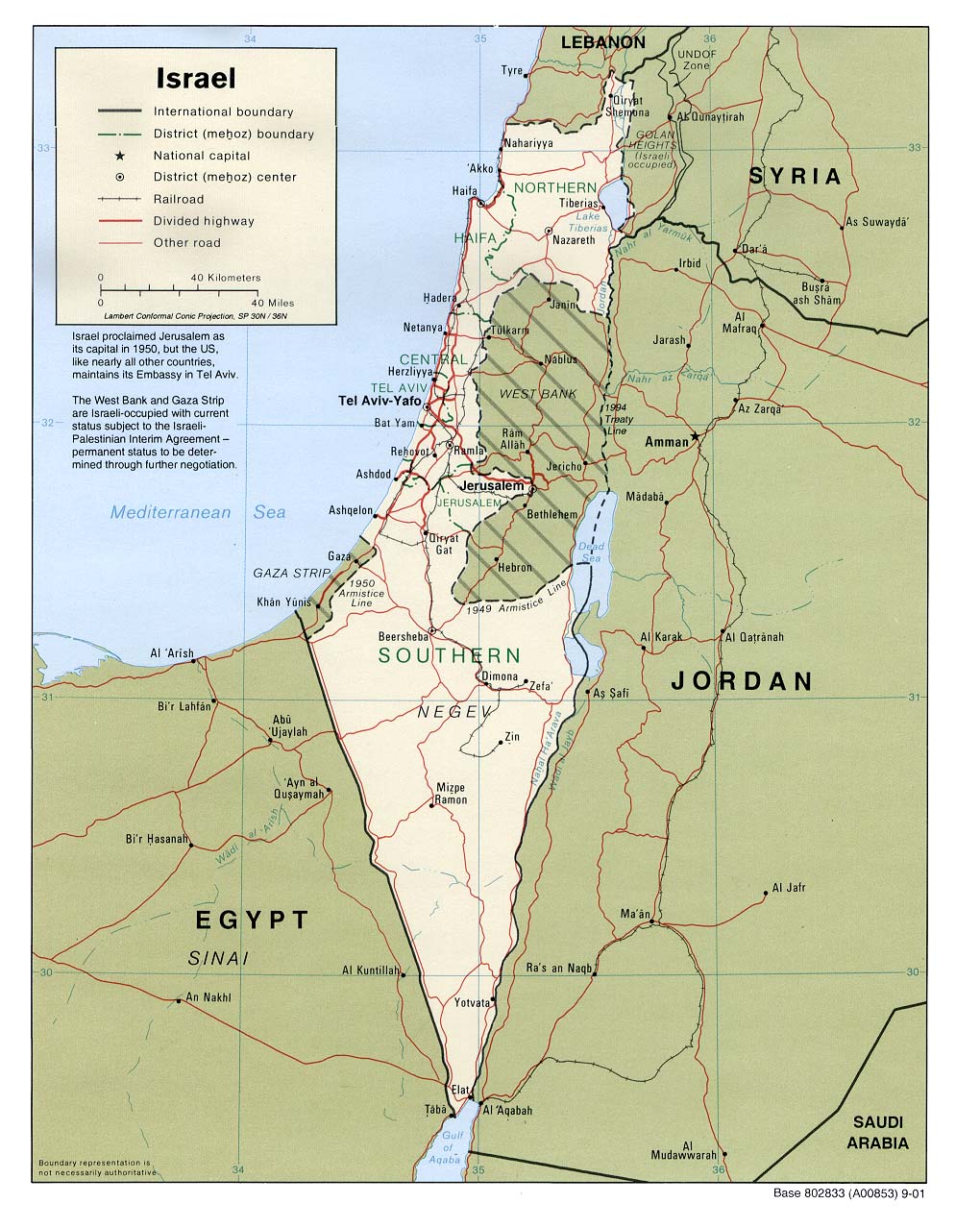
May Israel Defend Itself?

The PLO, Hamas, and Hezbollah have all vowed the destruction of Israel. If Israel has the right to exist and have sustained borders, what legitimate tools of self-defense are they entitled to use?

This was the question I asked Peter Makari during his workshop at the annual meeting of the Kansas-Oklahoma Conference, which met in Wichita, September 28-30. Makari is the lead Executive for the United Church of Christ's Global Ministries in the Middle East and Europe.

Makari's reply went something like this: The PLO signed a statement saying they recognize Israel's right to exist. Hamas has not, although there's a split within them. Some want peace. The radicals are on both sides. In Israel, there are Jews who don't want Palestinians to have their own country. Their voices are constantly in the press.

At that point I interjected: "But that's not the prevailing policy of Israel. That's certainly not the policy of Ehud Olmert's government. Meanwhile, you got Hamas and Hezbollah constantly launching rockets into Israel. Again, what legitimate tools are they entitled to use to defend themselves?"

Earlier in the conference, Makari described how Israel is heavily armed, possesses a nuclear bomb, and how the wall they built in the West Bank disrupts lives and violates internationally recognized borders.

An observation: Unlike bullets and bombs, the wall by itself doesn't kill anyone. And the wall has significantly curtailed suicide bombers inside Israel. The wall may not be the perfect solution, but it seems to be the least violent way Israel can protect itself.

Markari wouldn't answer my question.

Which kind of answers the question.

But I'm still going to keep asking.

Monday, October 01, 2007

Individual Beliefs Among UCC Groups

From the beginning, the United Church of Christ (UCC) has been a non-creedal denomination. It is guided by testimonies, not tests of faith. Beyond the confession that Jesus Christ is the head of the church, you basically have the freedom to believe whatever you want.

While the UCC offers tremendous personal autonomy for the individual, when you come into a group, the individual has to compromise some of his or her beliefs in order to be together with others. Certainly, individuals contribute to the life of the group, but no one individual sets the group's agenda. Especially in the UCC, ours is not authority in hierarchy. We speak to, not for each other.

While an individual can consider and weigh competing ideas, in the end, a person must live by an overall principal. If not, you're a hypocrite at best, or at worst, a schizophrenic-- split and unable to function. The same thing is true of groups. Groups must live by an overarching principal. Otherwise, you have chaos or anarchy.

I make those psychological and sociological observations to say this: Even in a place like the UCC where individual autonomy is cherished, when UCC people come together in a group, there must be a predominant guiding belief that directs the group's common life.

This is true with any UCC group-- a local church, conference, and General Synod. Individually, UCC people have their beliefs-- and collectively, so do UCC groups. By being part of the group, you're in covenant to be part of the conversation.

Why do I say all this? Because in the UCC's quest to honor individual autonomy, we neglect the fact that UCC groups take on a life of their own, guided by their own beliefs and practices.

At this point, some of you might be thinking, "duh," but it's a significant observation for someone like myself, whose evangelical beliefs are not held by most UCC folks. My individual beliefs will find little representation in a UCC group setting. Yes, they'll be respected (most of the time), but in a group, no one person-- me included-- is entitled to a hearing. Yes, you may have your own beliefs, but the group is also going to have its own beliefs. The minority may voice its opinion, but the majority opinion will always direct the group.

If there's a group value I saw on display at the the annual meeting of the United Church of Christ Kansas-Oklahoma Conference, which met over the weekend in Wichita, it's a commitment to the "inclusive gospel," which Episcopal priest Phillip Turner rightly argues is not a proper understanding of the Gospel contained in Scripture.

Basically, the inclusive gospel declares that God loves everyone and we in turn should love and welcome everyone. This is how I saw that group belief on display at our annual meeting:
  • Nobody is going to hell.
  • Everyone is saved, whether they know it or not.
  • Jesus did not come to give salvation, but enlightenment.
  • The Great Commandment is to love your neighbor.
I appreciate the UCC's tradition that gives me the freedom to believe whatever I want. But when the core of your beliefs are vastly different from those of the group-- as mine have been over my 11+ years-- I honestly wonder how much longer I can continue in this covenant.

UPDATE: This article has been rewritten for a larger audience at UCCTruths.com